By Steve Toloken
STAFF REPORTER / ASIA BUREAU CHIEF
Published: September 18, 2014 7:48 pm ET
Updated: September 18, 2014 7:50 pm ET
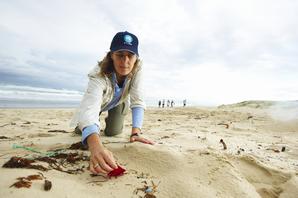
Image By: Commonwealth Scientific and Industrial Research Organisation
Denise Hardesty collects marine debris as part of the study for the Commonwealth Scientific and Industrial Research Organisation.
About 75 percent of the trash found in the waters off Australia’s beaches is plastic, with most of that coming from local sources rather than sea-borne debris drifting in, according to a Sept. 15 study from scientists and the social investment arm of energy company Shell Australia.
The study, part of a three-year Australian government research project, said that about 40 percent of seabird species now ingest plastic, but predicated that could increase to 95 percent of species by 2050, given rising levels of plastic production.
“We found about three-quarters of the rubbish along the coast is plastic,’’ said Denise Hardesty, study director for the Commonwealth Scientific and Industrial Research Organisation, Australia’s national science agency. “Most is from Australian sources, not the high-seas, with debris concentrated near cities.”
The study said debris can trap animals or they can mistake it for food and eat it.
The 364-page analysis estimated that between 5,000 and 15,000 turtles in the Gulf of Carpentaria, off Australia’s northern coast, have been killed after getting ensnared in derelict fishing nets.
It said the Tasman Sea south of Australia is a “global hotspot” for seabird impacts
‘’We also carried out a global risk analysis of seabirds and marine debris ingestion for nearly 200 species and found that 43 percent of seabirds and 65 percent of individuals within a species have plastic in their gut,” the study said,
“Globally, nearly half of all seabird species are likely to ingest debris, eating everything from balloons to glow sticks, industrial plastic pellets, rubber, foam and string,” Hardesty said, in a press release.
The study said that with rising levels of plastic production, more seabird species will ingest plastic.
“Our analyses predict that plastics ingestion in seabirds may reach 95 percent of all species by 2050, given the steady increase of plastics production,” it said.
“Approximately one third of marine turtles around the world have likely ingested debris, and this has increased since plastic production began in the 1950s,” Hardesty said. “By garnering the information needed to identify sources and hotspots of debris, we can better develop effective solutions.”
The CSIRO team said it surveyed sites about every 100 kilometers along Australia’s coastline. Besides Shell and CSIRO, South Melbourne-based Earthwatch Australia also participated in the work.
Hardesty said personal responsibility is part of the solution, and she advocated things like re-usable shopping bags and disposing of waste properly.
But she also said that government programs like container deposits, which industry often opposes, can help reduce marine litter.
“It’s not practical to clean up the ocean’s garbage patches, but we can stop rubbish from getting in there in the first place,” she said. “We know that incentives such as container deposit schemes are effective, and we can also choose products that don’t use plastic microbeads.”
The study said it’s the world’s largest collection of information about marine debris. It estimated that the concentration of plastic in Australian waters ranged from a few thousand pieces per square kilometer to more than 40,000 pieces.
The Australian results mirror those of a July study by several environmental groups in the Philippines, which found that 60 percent of the waste in Manila Bay was plastic, with plastic bags making up 23 percent of the total, news reports said.
That study was done as part of a bay cleanup for International Plastic Bag Free Day on July 3. |